1914-1918 World War 1 Painting
1914-1918 Commemorating 100 Years Since World War I: A Symbolic Painting
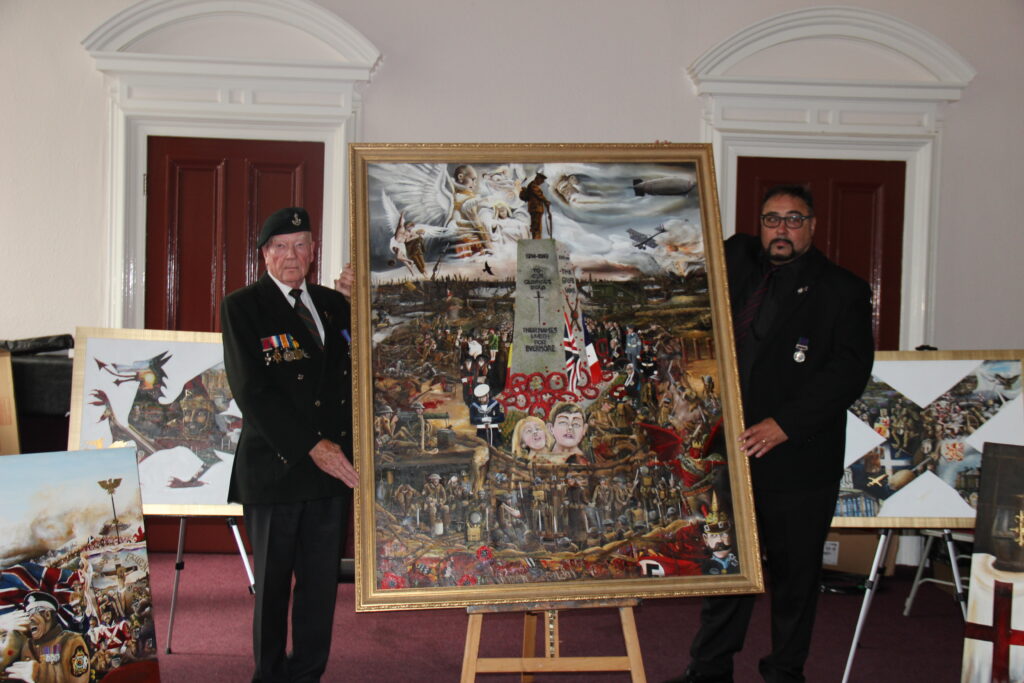
To mark the centennial of World War I, which raged from 1914 to 1918, a group of artists and historians collaborated to create a powerful painting that tells the story of this defining conflict. This unique artwork is made up of many smaller symbolic images—soldiers in trenches, poppies representing remembrance, broken weapons, and maps of battlefronts. When seen from afar, these symbols merge into a larger, deeply moving picture that captures the complexity and tragedy of the Great War.
The painting stands as both a tribute to those who lived and died during the war and a reminder of its lasting impact on the world. Its layered symbolism encourages viewers to reflect on the immense sacrifices made and the difficult lessons learned from this pivotal moment in history. The piece combines art and history to create a meaningful experience that links the past and the present in a celebration of peace and remembrance.
This conceptual artwork emphasizes meaning over form, inviting us to understand the horror of the Great War. The violence was staggering: over 37 million casualties, including well over 16 million deaths and 20 million wounded. It ranks among the deadliest conflicts in history. The British Empire alone mobilized nearly 9 million people, suffering over 900,000 killed, well over 2 million wounded, and nearly 200,000 missing.
Visitors often return to the painting, discovering new details and personal insights each time. It honors brave acts and the brutal reality of war, marking a century since the conflict. Young men fought with pride and a sense of duty, hoping to protect democracy, yet both sides paid a heavy price. Survivors struggled to reintegrate into society, rejecting the old values that had led them to war. The conflict created a generational divide and is often seen as signaling the end of the British Empire and the start of a risky, new era.
World War I changed the world forever. Through this art, we remember not just the history but the human cost—and the hope for lasting peace.
and peace.
This conceptual art piece puts symbolism first. The meaning matters more than the final image. To grasp why I created it. Know the Great War’s horror. Violence and death hit hard. World War One saw over 37 million casualties. More than 16 million died. Twenty million got wounded. It ranks as one of history’s deadliest fights. British Empire losses spark debate. Records vary by definition and damage. Data here match most experts. British Empire: Total mobilized 8,904,467. Killed: 908,371. Wounded: 2,090,212. Missing: 191,652. Total casualties: 3,190,235. Viewers revisit the painting often. Each time brings fresh sights and personal views. It marks 100 years since WW1. The work honors bold acts, grim brutality, and war’s toll. It shaped our world. Young men chased honor, glory, and duty. They aimed to guard democracy. Lions at heart, they fought with pride. Both sides lost tens of thousands. Survivors reeled from the fight. Many struggled to fit back home. They shunned old values that drove them there. This split their generation from roots and heritage. Some call it the British Empire’s end. A risky new era began. The world changed forever.
The Story Behind the Painting
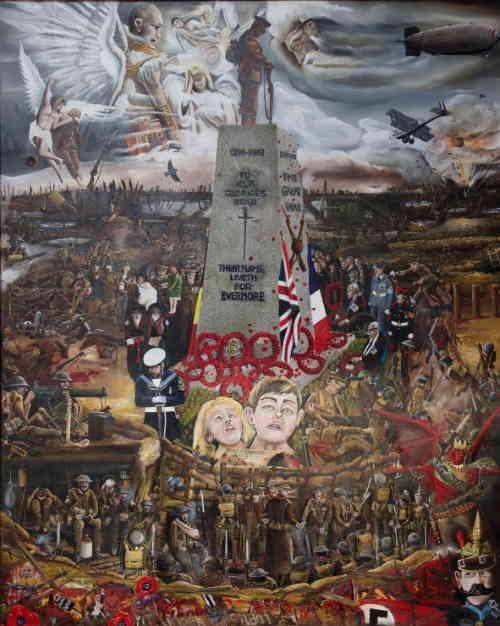
This powerful artwork tells a story of righteousness versus evil through a series of symbolic images. At the top, God weeps in the clouds while the Archangel Gabriel leads a group of mourning angels, gathering the fallen from a battlefield stained with mud and blood. Nearby, Death watches silently, and Lucifer grins with cruel joy, whispering to a young corporal about the horrors of vengeance. The painting captures the harsh reality of trench life, showing both the horror and acts of kindness that crossed enemy lines, alongside brave souls facing overwhelming odds.
The middle of the canvas depicts the brutal machinery of war: Zeppelins float overhead, dogfights rage above no man’s land, and scenes of battle unfold with gas clouds, charging horses, medics saving lives, tanks rolling like steel beasts, and waves of soldiers storming trenches to the sound of bagpipes. The artist does not shy away from the darker aspects, including the shame of “shot at dawn” executions for soldiers broken by war, now recognized as PTSD. A vigilant Vickers gun sentry and his team stand ready with gas masks, embodying the constant tension of the front lines.
The painting’s main focus is a war memorial. In one corner is a Royal Navy sailor, and in the other is a tired soldier. In between them are children holding their father’s last letter. Below the memorial, a hellish scene shows Lucifer challenging the Archangel Michael, boasting about the destruction he has caused as lost souls fall, pulled by demons. In a German trench, a young Adolf Hitler listens to dark whispers, foreshadowing the rise of the swastika and a fresh inferno of global conflict. The painting pays tribute to everyone who suffered, including the unknown German soldier with a wooden cross and the Iron Cross shining among the wire and poppies. By 1934, Germany had lost millions of people.
The battlefield image fades toward the bottom, but the message remains clear: to remember the pain and sacrifice of all the fallen from British conflicts. The artist personally honors those who share his name, listing soldiers from 1914 to 1918 who fought and died, ensuring their memories live on through this tribute.
MEDIA

Poem By Melanie Palliser